Worksheet: Colour cells
Name:
1. Which animal sees this?
Each picture shows the same red tulips through one animal's eyes. Write the animal under each picture: Dog, Western honey bee, Rock pigeon, Peacock mantis shrimp.
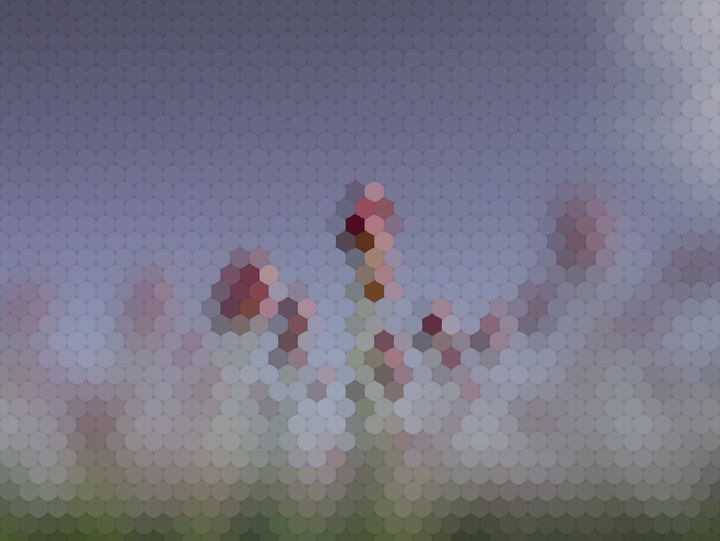
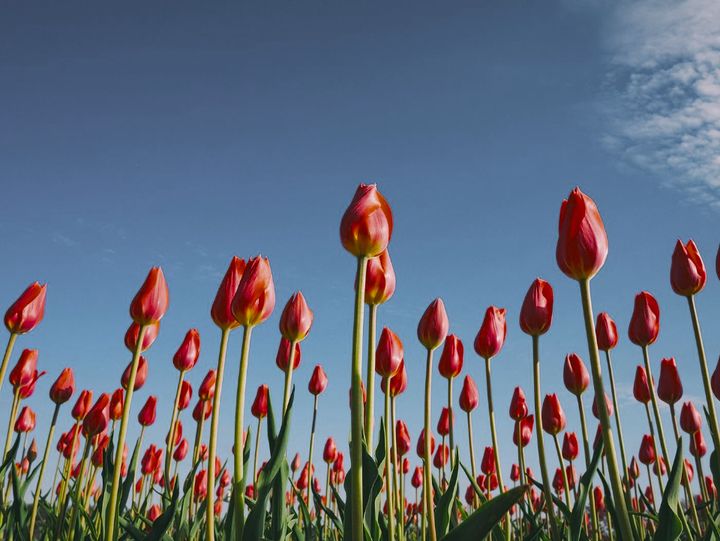


2. Circle the difference
Left: the tulips as you see them. Right: as the dog sees them. Circle three things that changed.
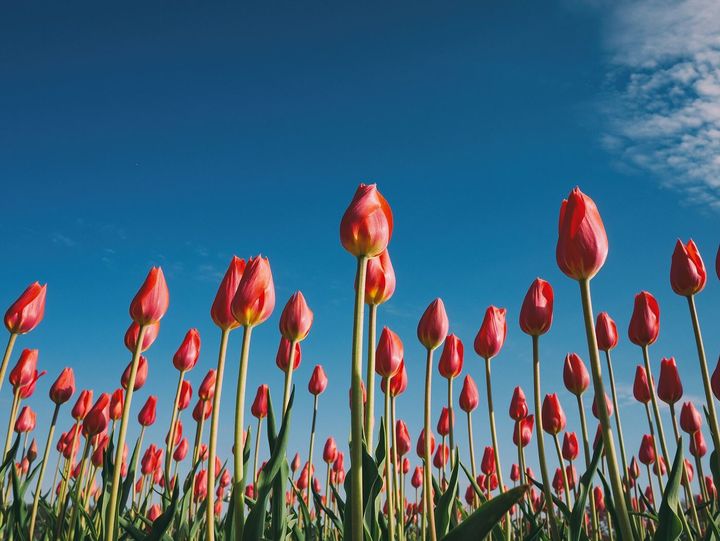
3. Talk and write
Does having more colour cell types always mean telling more colours apart? What else might matter?
Answer key (for the teacher)
1. Picture A: Peacock mantis shrimp; Picture B: Rock pigeon; Picture C: Dog; Picture D: Western honey bee.
2. Any three changes the pupils can point to on the two pictures.
3. Not always: the brain has to compare the signals from the cells, and how it compares them matters too.
Facts to share
Each fact comes from published measurements in our catalogue; the id names the values it uses.
- A dog sees with 2 colour types; you have 3. (Dog; fact canis-familiaris.col.count; values Canis familiaris#colour.n, Homo sapiens#colour.n)
- A sign you can read from 10 m, a dog has to get to about 1.3 m to see as clearly. (Dog; fact canis-familiaris.acu.sign; values Canis familiaris#acuity.cpd, Homo sapiens#acuity.cpd)
- Fast things look about 1.3 times slower to a dog. (Dog; fact canis-familiaris.cff.slow; values Canis familiaris#temporal.cff, Homo sapiens#temporal.cff)
- The western honey bee has 3 colour types like you, but one of them sees ultraviolet. (Western honey bee; fact apis-mellifera.col.uv3; values Apis mellifera#colour.n, Apis mellifera#colour.uv, Homo sapiens#colour.n)
- A sign you can read from 10 m, a western honey bee has to get to about 3.9 cm to see as clearly. (Western honey bee; fact apis-mellifera.acu.sign; values Apis mellifera#acuity.cpd, Homo sapiens#acuity.cpd)
- Fast things look about 3.7 times slower to a western honey bee. (Western honey bee; fact apis-mellifera.cff.slow; values Apis mellifera#temporal.cff, Homo sapiens#temporal.cff)
- A rock pigeon sees with 4 colour types; you have 3. (Rock pigeon; fact columba-livia.col.count; values Columba livia#colour.n, Homo sapiens#colour.n)
- A sign you can read from 10 m, a rock pigeon has to get to about 2.2 m to see as clearly. (Rock pigeon; fact columba-livia.acu.sign; values Columba livia#acuity.cpd, Homo sapiens#acuity.cpd)
- Fast things look about 1.5 times slower to a rock pigeon. (Rock pigeon; fact columba-livia.cff.slow; values Columba livia#temporal.cff, Homo sapiens#temporal.cff)
- A peacock mantis shrimp sees with 10 colour types; you have 3. (Peacock mantis shrimp; fact odontodactylus-scyllarus.col.count; values Odontodactylus scyllarus#colour.n, Homo sapiens#colour.n)
- A sign you can read from 10 m, a peacock mantis shrimp has to get to about 17 cm to see as clearly. (Peacock mantis shrimp; fact odontodactylus-scyllarus.acu.sign; values Odontodactylus scyllarus#acuity.cpd, Homo sapiens#acuity.cpd)
A simulation built from published eye measurements, not what the animal experiences. seelikeanimals.com/classroom/lessons/colour-cells/