Senses and survival: an animal vision lesson
Pupils link the way an animal sees to the way it lives: hunters, hunted, day and night.
Hook
Ask: if you had to catch your dinner, what kind of eyes would you want?
Steps
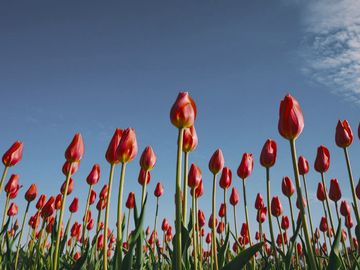
- 5 minShow the photo through the Harris's hawk. Pupils describe what is sharp and what is not.
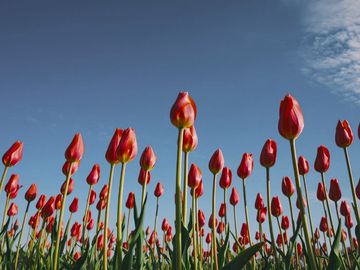
- 5 minSwap to the rock pigeon. Pupils compare the hunter with the hunted.
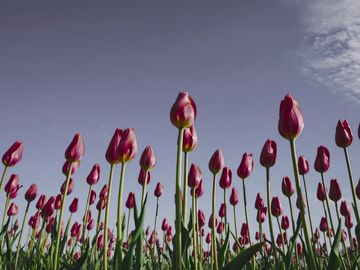
- 5 minSwap to the rattlesnake. Pupils list what the snake might rely on besides its eyes.
- 10 minIn pairs, pupils match each animal to a job: spotting food from high up, watching for danger all round, hunting in the dark.
- 5 minTalk: each animal gets information through its senses, and its brain uses it to act.
The animals
Talk about it
Why might a prey animal be better off seeing all round than seeing very sharply?
A good answer
Spotting danger early, from any direction, can matter more to a hunted animal than seeing fine detail.
Worksheet
Print the worksheet (A4 or US Letter, with an answer key on its own page).
Curriculum links
- NGSS 4-LS1-2: Use a model to describe that animals receive different types of information through their senses, process the information in their brain, and respond to the information in different ways. Source
- England, Year 6: Light: Objects are seen because they give out or reflect light into the eye. Source
- England, Year 6: Evolution and inheritance: Identify how animals and plants are adapted to suit their environment in different ways. Source
Curriculum links checked on 2026-10-01 for the US (NGSS) and England only.